
.svg)











.webp)


Chronic Shoulder Pain: Can Shockwave Therapy Restore Movement?
When Shoulder Pain Becomes More Than a Strain
Almost everyone experiences a minor shoulder ache after lifting something heavy or sleeping in an awkward position. In many cases, those discomforts fade within a few days. When a dull ache turns into a sharp catch that lingers for months, however, the issue is no longer a simple strain. At that point, chronic shoulder pain is often involved.
This transition typically reflects a breakdown in the normal healing process. Repeated stress on a tendon can lead to microscopic damage. If the body cannot keep pace with repair, it responds by laying down disorganized scar tissue. Unlike healthy tissue, scar tissue lacks elasticity and resilience, which gradually limits motion and increases irritation. Beyond the physical pain, the inability to reach overhead, fasten a seatbelt, or lift a child can take an emotional toll, creating frustration and a sense of lost independence. This raises an important question: can shockwave therapy help restore movement in chronic shoulder pain when healing has stalled?
Common Causes of Chronic Shoulder Pain
The shoulder is the most mobile joint in the body, which also makes it particularly vulnerable to injury and degeneration. Several conditions commonly contribute to persistent shoulder pain:
Rotator Cuff Tendinopathy: This condition involves gradual wear and degeneration of the tendons that stabilize the shoulder. Repetitive overhead activity or heavy lifting can exceed the tissue’s ability to repair itself, leading to weakness, pain, and reduced endurance rather than acute inflammation.
Calcific Tendinopathy: In this condition, calcium deposits form within a tendon, increasing pressure and irritation. These deposits can sharply limit motion and cause sudden pain flares. Shockwave therapy is often considered in these cases because of its ability to mechanically disrupt calcifications.
Bursitis and Impingement: Fluid-filled bursae help reduce friction between tendons and bone. When inflammation narrows the space within the shoulder, normal movement leads to repeated pinching of soft tissue, perpetuating pain and stiffness.
Frozen Shoulder (Adhesive Capsulitis): Here, the joint capsule thickens and tightens, resulting in significant stiffness and loss of motion. This process often develops gradually and can take many months or longer to resolve without intervention.
Post-Injury or Post-Surgical Stiffness: After trauma or surgery, scar tissue formation is part of healing. When that tissue becomes excessive or rigid, it can physically restrict movement and alter shoulder mechanics.
Biceps Tendinopathy: The tendon at the front of the shoulder may become irritated through overuse ,leading to pain that worsens with lifting or pulling movements.
Why Traditional Treatments Some times Stall
Initial treatment often includes rest, ice, activity modification, and anti-inflammatory medications. While these approaches can reduce symptoms, they do not always address the structural or biological factors preventing recovery. Corticosteroid injections may calm inflammation temporarily, but do not restore tendon quality and can contribute to tissue weakening if used repeatedly.
A common reason recovery stalls is limited circulation. Tendons already have a low blood supply, and scar tissue further restricts nutrient delivery. In these cases, even well-designed physical therapy programs can plateau because the tissue environment itself is not capable of responding fully to exercise alone.
What Shockwave Therapy Is
Extracorporeal shockwave therapy is a non-invasive treatment that uses high-energy acoustic waves to stimulate musculoskeletal tissue. Despite its name, it does not involve electrical shocks or surgery. The technology has been used for decades in medicine and is now widely applied in orthopedic and sports medicine settings.
For patients seeking non-surgical shoulder pain treatment, shockwave therapy offers an option that targets deeper tissue changes without incisions, anesthesia, or prolonged downtime. It is often considered when standard conservative care has failed but surgery is not yet appropriate.
Also Read: Shockwave Therapy Myths vs. Facts: What Patients Should Know Before Treatment
How Shockwave Therapy Works in the Shoulder
Shockwave therapy introduces controlled mechanical stress at the cellular level. This stimulus is designed to re-engage biological repair processes that have slowed or stopped.
● Improved Blood Flow: Acoustic waves stimulate the formation of small blood vessels, increasing oxygen and nutrient delivery.
● Disruption of Calcifications: In calcific tendinopathy, shockwave energy helps soften and fragment calcium deposits.
● Collagen Remodeling: Treatment encourages production and reorganization of collagen, supporting healthier, more elastic tendon tissue.
● Pain Signal Modulation: Nerve fibers may become temporarily less sensitive, reducing pain intensity and allowing freer movement.
What a Treatment Plan Looks Like
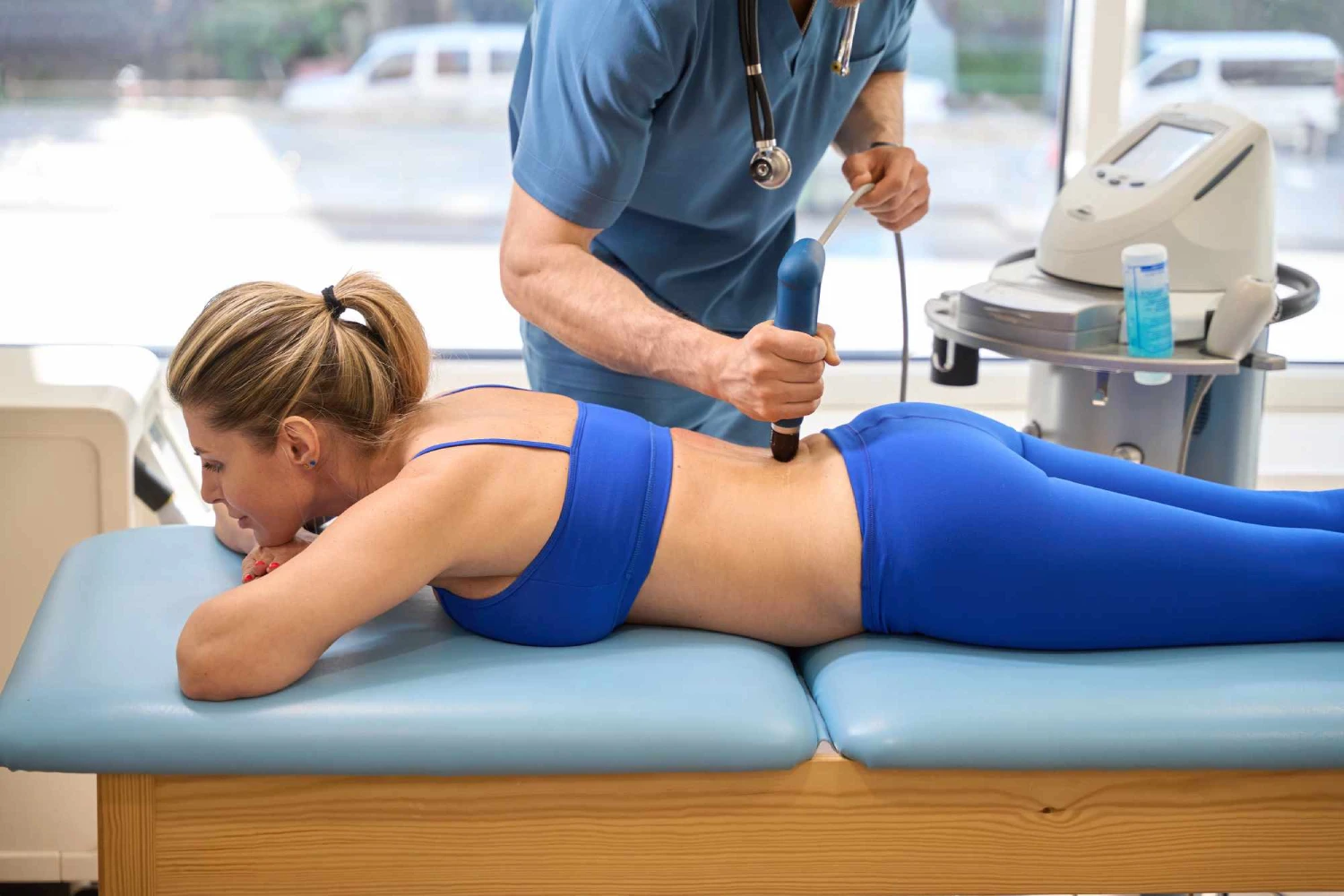
A typical shockwave therapy session lasts 15 to 20 minutes, or less. Gel is applied to the skin to optimize energy transfer, and a handheld device is guided over the affected areas. Patients commonly describe a tapping or deep pressure sensation. Discomfort is expected but adjusted to remain tolerable.
Most non-surgical shoulder pain programs involve four to six sessions spaced about a week apart. There is no formal down time, though patients are generally advised to avoid heavy lifting or high-impact activity for a short period after treatment.
When Patients Begin to Notice Change
Some patients report symptom relief early in the treatment course, often related to pain modulation. The more meaningful improvements occur gradually.
Because shockwave therapy relies on biological remodeling rather than numbing, improvements in mobility and function typically become most noticeable six to twelve weeks after the final session, once collagen maturation and tissue adaptation have progressed.
Who Is a Good Candidate?
Shockwave therapy is often appropriate for adults and athletes with shoulder pain lasting longer than six to eight weeks that has not improved with rest or physical therapy. It is particularly useful for tendinopathy, calcific conditions, and post-injury stiffness when surgery is not clearly indicated.
When Shockwave May Not Be the Right Answer
Shockwave therapy is not appropriate for every shoulder condition. Full-thickness rotator cuff tears, advanced joint degeneration, active infections, or tumors require different management. Imaging and clinical evaluation are essential to confirm whether shockwave therapy fits the underlying diagnosis.
Integrating Shockwave Into a Recovery Strategy
Shockwave therapy works best as part of a comprehensive plan. Once pain and tissue stiffness improve, targeted strengthening and mobility exercises help reinforce proper mechanics and reduce recurrence risk. This combined approach supports durable recovery rather than short-term relief.
Also Read: Why Shockwave Therapy Is Becoming a Go-To Choice for Chronic Pain Relief
Conclusion
Chronic shoulder pain affects far more than comfort—it limits independence, confidence, and quality of life. Shockwave therapy offers a non-surgical option that supports the body’s own repair processes and helps bridge the gap between persistent pain and restored movement.
Early evaluation and appropriate treatment planning often lead to better outcomes. Addressing shoulder pain before stiffness and dysfunction become entrenched can make there turn to daily activities smoother and more sustainable.
Contact us to book an appointment at The Pain Free Institute online!
.png)

.png)




Medipark
Miracle Mile Surgery Center provides advanced outpatient surgical care with expert physicians and state-of-the-art facilities.
Contact Us
