.svg)







.webp)


Search the site

Shockwave Therapy

Shockwave therapy, formally known as extracorporeal Shockwave therapy or ESWT, uses high-energy acoustic waves. These are mechanical pressure pulses, not electrical shocks.
About the treatment
Most people do not wake up one morning thinking they will need a “pain management plan.” It usually begins quietly. A heel that aches after long walks. A shoulder that feels stiff when reaching overhead. A knee that no longer trusts quick turns. At first, it feels temporary. You rest. You stretch. You wait.
But for many, the discomfort persists. It settles in. Weeks turn into months. The body adapts to the pain. You stop moving the same way. You avoid certain activities. Eventually, the question changes from “What did I do?” to “Why isn’t this healing?”
This is the point where many people feel cornered. They are told to keep waiting, try another round of physical therapy, or consider injections or surgery. None of those options feel quite right. Waiting feels passive. Surgery feels extreme. And the idea of managing pain indefinitely feels like surrender.
Shockwave therapy exists in the space between those extremes.
It is part of a growing shift in modern medicine away from simply managing symptoms and toward restoring the body’s ability to heal. Rather than masking pain or bypassing damaged tissue, Shockwave therapy works by waking the tissue back up. It gives the body a reason to repair what has stalled.
At The Pain Free Institute, we use Shockwave therapy as part of a regenerative care model. The goal is not just to ease the pain. The goal is to restore movement, rebuild damaged tissue, and help patients return to life without negotiating every step.
When tissue is injured, the body usually responds with inflammation, blood flow, and repair. That process is efficient in areas with rich circulation, such as muscle. But structures like tendons, ligaments, and the plantar fascia are different. They have a limited blood supply, so healing is slower.
In some cases, the repair process never completes. The tissue becomes thickened, stiff, and poorly nourished. Microscopic damage accumulates. The body no longer recognizes the area as injured, even though function has not returned. This is what clinicians refer to as “stalled healing.”
Common examples include:
These conditions often respond poorly to rest alone. Anti-inflammatory medications may reduce discomfort but do not alter tissue structure. Time passes, but the problem remains.
Shockwave therapy was developed for this exact problem. It does not numb pain. It reactivates the body’s repair mechanisms in tissues that have stopped responding.
Shockwave therapy, formally known as extracorporeal Shockwave therapy or ESWT, uses high-energy acoustic waves. These are mechanical pressure pulses, not electrical shocks.
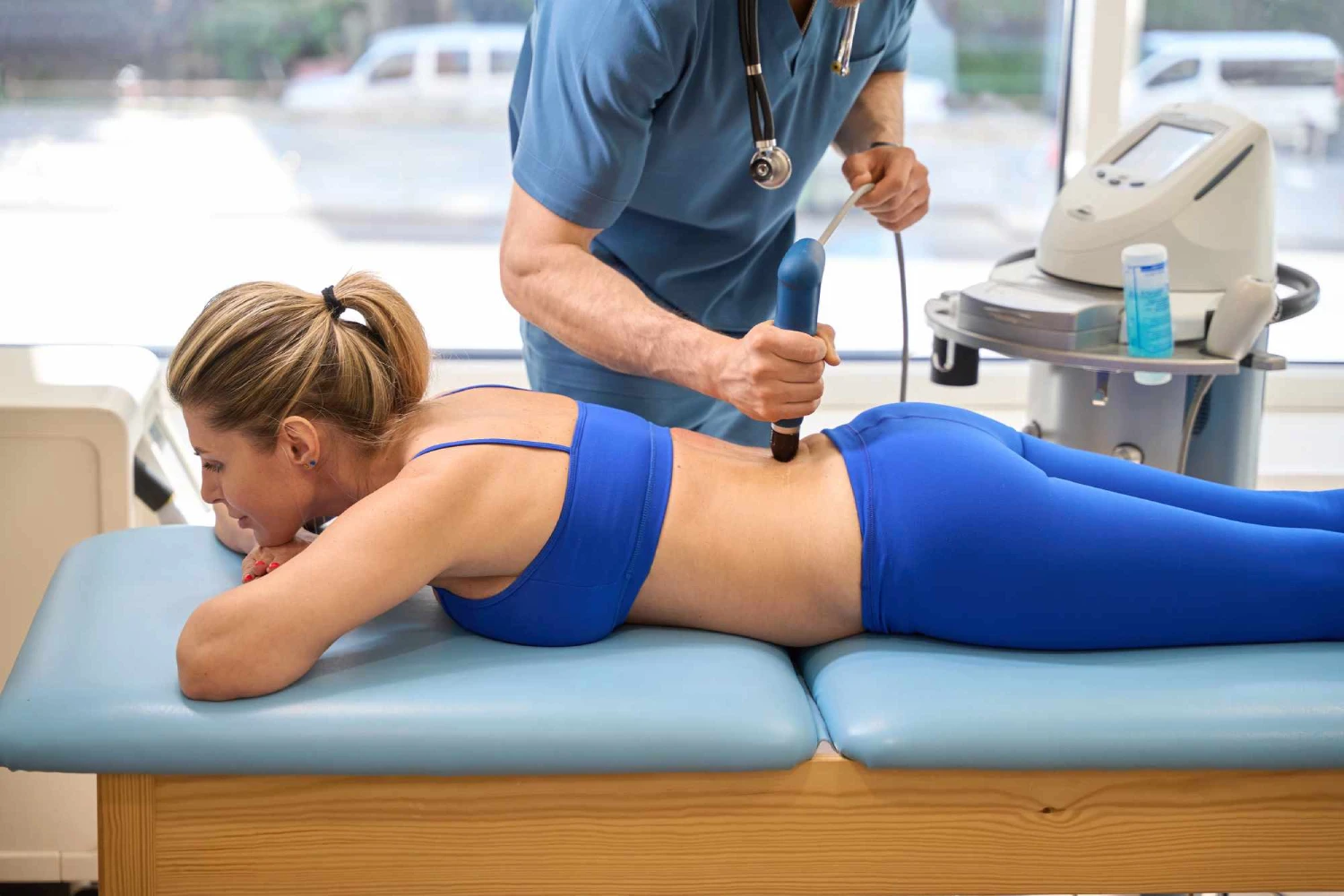
A handheld device delivers these waves through the skin into targeted tissue. The energy travels through layers of muscle, tendon, and connective tissue. Where it reaches damaged areas, it creates controlled microtrauma.
This microtrauma is intentional. It signals the body that healing is needed again.
The process triggers several biological responses:
Together, these effects change the environment inside the tissue. Areas that were stiff, thickened, or poorly nourished begin to remodel. The body resumes the work it had paused.
This is why Shockwave therapy is classified as regenerative. It does not replace tissue. It encourages your own body to rebuild it.
At a cellular level, Shockwave therapy works through a process called mechanotransduction. This is the way cells respond to physical force.
When acoustic waves strike damaged tissue, they cause brief mechanical stress. Cells interpret this as a call to action. Blood vessels dilate. Metabolism increases. Inflammatory mediators are released in a controlled way. New capillaries form.
In practical terms, this means:
Unlike treatments that suppress inflammation, Shockwave therapy harnesses inflammation to support healing. It restarts a natural biological cascade.
This is why the effects are not immediate, unlike numbing treatments. Patients often notice gradual improvement over several weeks. The tissue is changing, not just quieting.
Not all Shockwave treatments are the same. There are two primary forms used in clinical care.
Radial Shockwave therapy disperses lower-energy pressure waves over a broader surface area. It is most commonly used to support:
Radial shockwave is often compared to a deep mechanical massage and is primarily used for pain modulation and circulation support, rather than tissue regeneration.
Focused Shockwave therapy by contrast, delivers higher-energy acoustic waves with precision at greater tissue depths. This technology is used in orthopedic and sports medicine settings for conditions that benefit from a biological healing response, including:
Focused shockwave has been shown to stimulate cellular signaling, blood vessel formation, and tissue remodeling — making it the preferred option when the goal is regenerative treatment rather than temporary symptom relief.
For this reason, at The Pain Free Institute, we invested in focused shockwave technology to provide patients with advanced, evidence-based regenerative care rather than surface-level therapy.
Shockwave therapy is not a generic wellness treatment. It is a medical tool that works best when it is targeted.
Many pain treatments aim to quiet symptoms. That has value. But symptom control alone does not restore function.
Regenerative care begins with a different question: Why is this tissue still injured?
Shockwave therapy fits into that philosophy. It is not about distraction from pain. It is about resolving the reason pain persists.
For patients, this often feels like a shift in agency. Instead of waiting for improvement, the body is given a clear signal to change. Instead of managing around injury, healing becomes active again.
This approach is especially meaningful for people who have tried conservative care without lasting results. It offers a middle path between “just live with it” and “go to surgery.”
Shockwave therapy is not a universal answer for every ache or injury. Its strength lies in treating conditions where healing has stalled. These are the cases where rest, stretching, ice, and time have already failed.
Most patients who benefit share a common story. Their pain has lasted months. It improves briefly with rest, then returns as soon as activity resumes. The area feels tender in one specific spot. Movement feels limited or guarded. The injury no longer feels “new,” but it never fully resolved.
These patterns matter. They suggest tissue that is no longer progressing through a normal repair cycle.
Shockwave therapy is used most often for dense, fibrous structures with limited blood flow. These tissues struggle to heal on their own.
Some of the most common applications include:
Tendon and Fascia Injuries
Chronic Muscle and Soft Tissue Pain
Overuse and Sports Injuries
These are not conditions that disappear overnight. They are built over time. Shockwave therapy works because it alters the tissue's internal environment, enabling repair.
Not every sore muscle requires regenerative care. But certain features make someone a strong candidate:
These symptoms suggest that the problem is structural, not just inflammatory.
Also Read: Shockwave Therapy Myths vs. Facts: What Patients Should Know Before Treatment
At The Pain Free Institute, Shockwave therapy is never applied without diagnosis. The process begins with a clinical evaluation.
We ask:
Imaging may be used to confirm the diagnosis. Ultrasound or MRI can reveal tendon thickness, tears, or calcifications. Physical examination identifies movement patterns that contribute to strain.
This matters because Shockwave therapy is not interchangeable with other regenerative treatments. Some injuries respond better to platelet-based therapies, or a combination of both. Others require mechanical correction. Shockwave therapy is chosen when the biology of the tissue suggests it can respond.
A treatment plan is then built around:
Most protocols involve three to five sessions spaced about a week apart.
The goal is not simply to apply waves. It is to match the biological response to the tissue’s capacity to heal.
Patients often describe Shockwave therapy as “doing something” rather than “waiting for something.” It creates momentum.
Rather than suppressing pain, it invites the body back into repair. The tissue begins to remodel. Movement becomes less guarded. Strength returns.
This shift changes how people relate to their injury. They stop accommodating it and begin rebuilding around it.
One of the biggest unknowns for patients considering Shockwave therapy is the experience itself. They often ask if it hurts, how long it takes, and whether it will disrupt their routine.
The process is far less dramatic than many expect.
There is no anesthesia. No incisions. No needles. You walk in and walk out on your own.
Your provider will review your diagnosis, treatment plan, and any prior care. Because Shockwave therapy works by stimulating a healing response, patients may be asked to pause anti-inflammatory medications for a few days beforehand. These medications can interfere with the very process the treatment is trying to activate.
There is no special preparation. You do not need to fast. You do not need a driver. You simply arrive in comfortable clothing.
A small amount of gel is applied to the skin over the painful area. This allows the acoustic waves to travel efficiently into the tissue.
The handheld device is then placed against the skin. It delivers rapid pulses into the targeted structure.
Most patients describe the sensation as:
It can feel intense over bony areas or highly sensitive points. It is rarely described as sharp pain. The intensity can be adjusted in real time. Communication matters. The goal is therapeutic stimulation, not endurance.
Each session lasts about 10 to 20 minutes.
That is it.
You can return to work. You can drive. You can walk out of the office on your own.
Some people feel temporary soreness, similar to a deep workout ache. Others feel lightness or warmth in the area. Mild redness or bruising can occur. These effects fade quickly.
Patients may be advised to avoid high-impact activity for up to 48 hours. This is not because the tissue is fragile. It is because the body is beginning a repair cycle and needs a short window to initiate it.
Shockwave therapy does not work like a numbing agent. It does not instantly and permanently erase pain in one visit.
The acoustic waves trigger biological activity. That activity unfolds over weeks.
Many patients notice small changes after the first or second session:
True tissue remodeling occurs gradually. Collagen fibers reorganize. Blood flow improves. Cellular signaling increases.
Most patients experience their greatest improvement between six and twelve weeks after the final session.
This is not passive waiting. It is active biological change.
Because Shockwave therapy alters tissue structure rather than masking symptoms, improvements tend to persist.
Instead of returning to the same compromised state, the tissue becomes more resilient. Tendons regain elasticity. Fascia becomes more pliable. Scar tissue softens.
The result is not simply less pain. It is a better function.
People walk differently. They move with confidence. They stop guarding.
That is the difference between relief and recovery.
Shockwave therapy is generally not recommended for people who:
These are not technicalities. They are protective boundaries.
At The Pain Free Institute, Shockwave therapy is never applied blindly. Every patient is evaluated. The tissue is examined. The diagnosis is confirmed. The treatment is chosen because it fits, not because it is trendy.
That is what makes the therapy safe in practice, not just on paper.
It is not a massage.
It is not a heat treatment.
It is not a surface-level comfort tool.
Shockwave therapy reaches deep into dense tissue. It creates mechanical stress that triggers biological change. That is why it works for areas that have failed to heal on their own.
It also means it must be used with intention.
Shockwave therapy is not appropriate for every type of pain. It is designed for conditions where tissue has stalled. It does not correct spinal instability. It does not treat systemic arthritis. It does not replace a fracture repair.
It is powerful when used for the right problem.
Many people arrive at a clinic with a label, not a diagnosis.
They say “plantar fasciitis” because that is what the internet suggested. They say “tendonitis” because that is what an urgent care provider wrote once.
But pain has structure. It has depth. It has cause.
Shockwave therapy is most effective when the exact tissue involved is known:
These details determine whether focused Shockwave is used, what intensity is appropriate, and how many sessions are needed.
This is why Shockwave therapy should not be sold like a spa treatment.
It is a medical tool. It requires medical judgment.
Shockwave therapy works best when it is not treated as a standalone miracle.
At The Pain Free Institute, it is part of a layered approach:
A patient with Achilles pain does not just need a healed tendon. They need a gait that no longer overloads it.
A patient with heel pain does not just need reduced inflammation. They need foot mechanics that stop re-injury.
Shockwave therapy creates the biological opportunity for recovery. What happens next determines whether that recovery lasts.
The earliest changes are subtle:
These are signs of improved tissue signaling.
Later, patients notice:
By the time the healing cycle completes, many people realize they are no longer managing pain. They are living without it.
That shift is what makes Shockwave therapy different from symptom control.
It does not simply quiet discomfort. It restores capacity.
Shockwave therapy feels modern, but it is not experimental. Versions of this technology have been used in medicine for decades, first in kidney stone treatment and later in orthopedics and sports medicine. Its safety profile is one of the reasons it has become so widely adopted in pain clinics.
That said, safe does not mean universal.
Shockwave therapy works by stimulating tissue. In most cases, that is exactly what the body needs. In a few specific situations, that stimulation is not appropriate.
These are the questions patients ask most often once they understand what Shockwave therapy actually does. Clear answers matter here because this treatment works best when expectations are realistic.
Shockwave therapy works best for chronic tendon and soft tissue conditions where healing has stalled. Common examples include plantar fasciitis, Achilles tendinopathy, tennis or golfer’s elbow, rotator cuff tendinopathy, patellar tendon pain, and chronic heel spurs. These tissues tend to have poor blood supply, which is exactly what Shockwave therapy is designed to address.
The treatment can feel uncomfortable, especially over bony areas or very tight tissue, but it is usually tolerable. Most patients describe the sensation as rapid tapping or deep pressure rather than sharp pain. The intensity can be adjusted, and sessions are short, typically 10 to 20 minutes.
Most patients need four to six sessions. These are often spaced about one week apart, though can be more frequent. The spacing matters because Shockwave therapy triggers a healing response that continues between sessions.
Some patients notice changes within the first one or two treatments, especially reduced morning stiffness or improved movement. However, true tissue repair takes time. Most meaningful improvement occurs gradually over six to twelve weeks as new collagen forms and tissue strength improves.
Yes. There is no downtime. You can return to normal daily activities immediately. However, patients are usually advised to avoid high-impact exercise or heavy loading of the treated area for about 48 hours to allow the healing response to begin.
Side effects are typically mild and short-lived. These may include temporary redness, slight swelling, minor bruising, or a dull ache in the treated area for a day or two. These are signs that the tissue has been stimulated.
Yes. Shockwave therapy has been used in medical settings worldwide for decades and has a strong safety record when used appropriately. Because it does not involve needles, anesthesia, or systemic medications, the risk of serious complications is very low.
Shockwave therapy is not recommended for individuals who are pregnant, have pacemakers, bleeding disorders, active infections in the treatment area, tumors in the targeted tissue, or open growth plates in the area being treated. A full evaluation ensures safety before treatment begins.
Shockwave therapy promotes healing. It increases blood flow, stimulates collagen production, and helps remodel damaged tissue. Pain reduction happens as a result of improved tissue health, not because symptoms are simply being blocked.
In many cases, yes. For chronic tendon conditions, Shockwave therapy can reduce or eliminate the need for injections by addressing the underlying tissue problem. Unlike treatments that focus only on symptom relief, Shockwave therapy aims to restore normal tissue function.
Yes. One of its unique strengths is its ability to break down calcium deposits in tendons, such as those seen in calcific shoulder tendinopathy or chronic heel spurs. This improves mobility and reduces mechanical irritation.
Age alone does not determine success. Tissue quality, diagnosis, and how long the injury has been present matter far more. Many older adults respond extremely well, especially when pain is related to degenerative tendon changes rather than acute injury.
In many cases, yes. Shockwave therapy is often used to treat scar tissue, stiffness, or lingering tendon pain after surgery, once healing has reached a safe stage. Your provider will determine appropriate timing.
Yes. If symptoms recur months or years later, Shockwave therapy can be safely repeated. Many patients use it as a way to manage flare-ups without resorting to injections or surgery.
Chronic pain often lingers because the body stopped trying to heal it.
Shockwave therapy works by restarting that process.
It does not numb pain. It does not mask inflammation. It creates a biological signal that tells damaged tissue to repair itself. For many patients, that is the missing step between conservative care and invasive procedures.
At The Pain Free Institute, Shockwave therapy is never treated as a shortcut or a one-size-fits-all solution. It is used thoughtfully, based on diagnosis, tissue quality, and individual goals. When combined with movement correction and rehabilitation, it becomes a powerful tool for lasting recovery.
If you have been living with pain that keeps returning, limits your activity, or has stopped responding to basic care, it may be time to look beyond symptom management.
Schedule an evaluation at The Pain Free Institute to see whether Shockwave Therapy is a good fit for your condition and goals.
The right treatment starts with understanding why your pain hasn’t healed — and what your body needs next.
Request your appointment today to start managing your pain and reclaiming your quality of life!
Other Treatments

Medipark
Miracle Mile Surgery Center provides advanced outpatient surgical care with expert physicians and state-of-the-art facilities.
Contact Us
A link to the federal Centers for Medicare and Medicaid Services (CMS) Open Payments web page is provided here. The federal Physician Payments Sunshine Act requires that detailed information about payment and other payments of value worth over ten dollars ($10) from manufacturers of drugs, medical devices, and biologics to physicians and teaching hospital be made available to the public.